
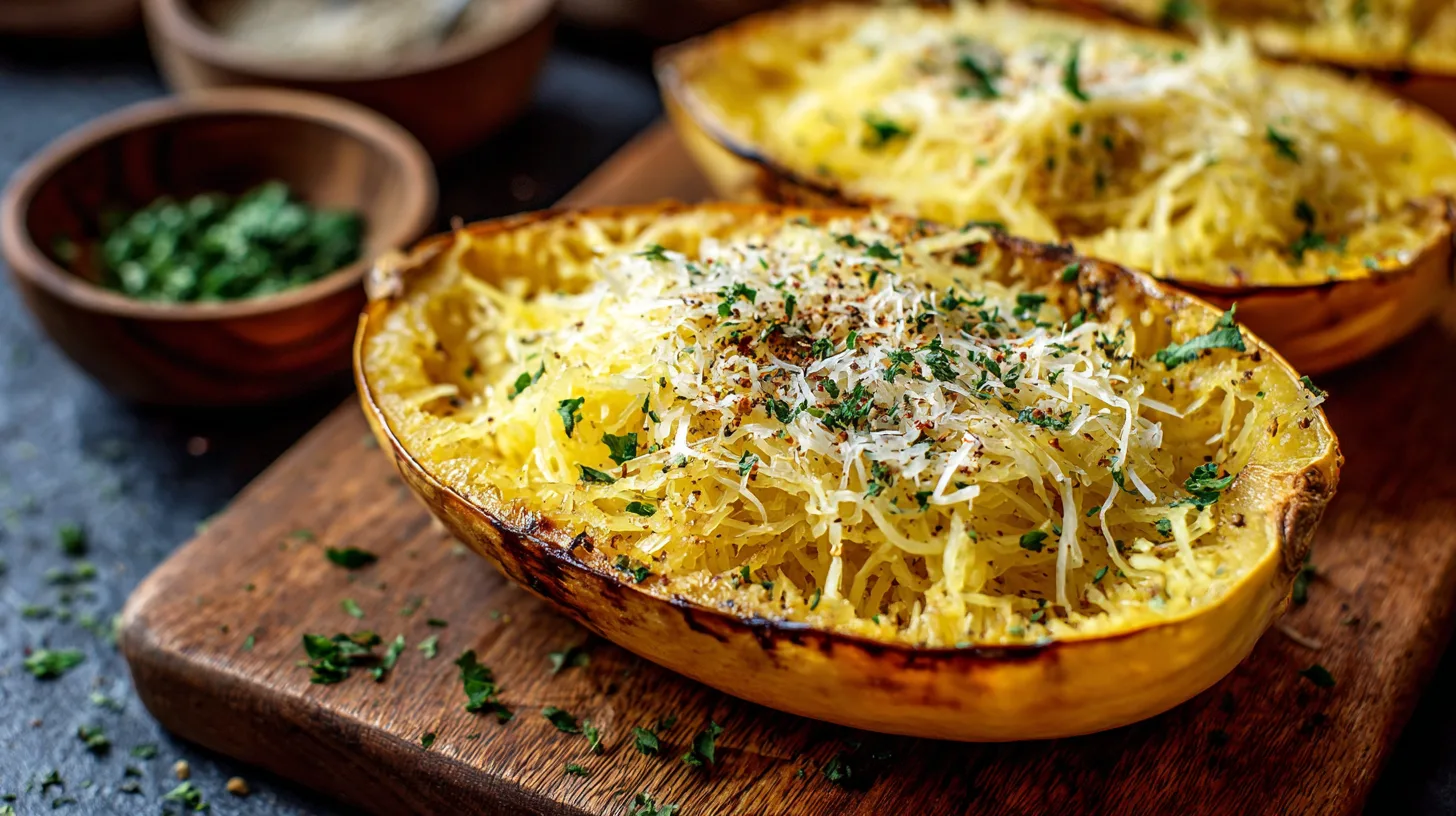
Did you know that spaghetti squash contains 90% fewer carbohydrates than traditional pasta while delivering 42% of your daily vitamin C needs? If you’re searching for delicious and healthy spaghetti squash recipes for dinner, you’re about to discover a game-changing Mediterranean-inspired dish that proves healthy eating doesn’t mean sacrificing flavor. This nutrient-dense alternative transforms your typical pasta night into a vibrant, satisfying meal that takes just 45 minutes to prepare – perfect for busy weeknights when you want something both nourishing and indulgent.
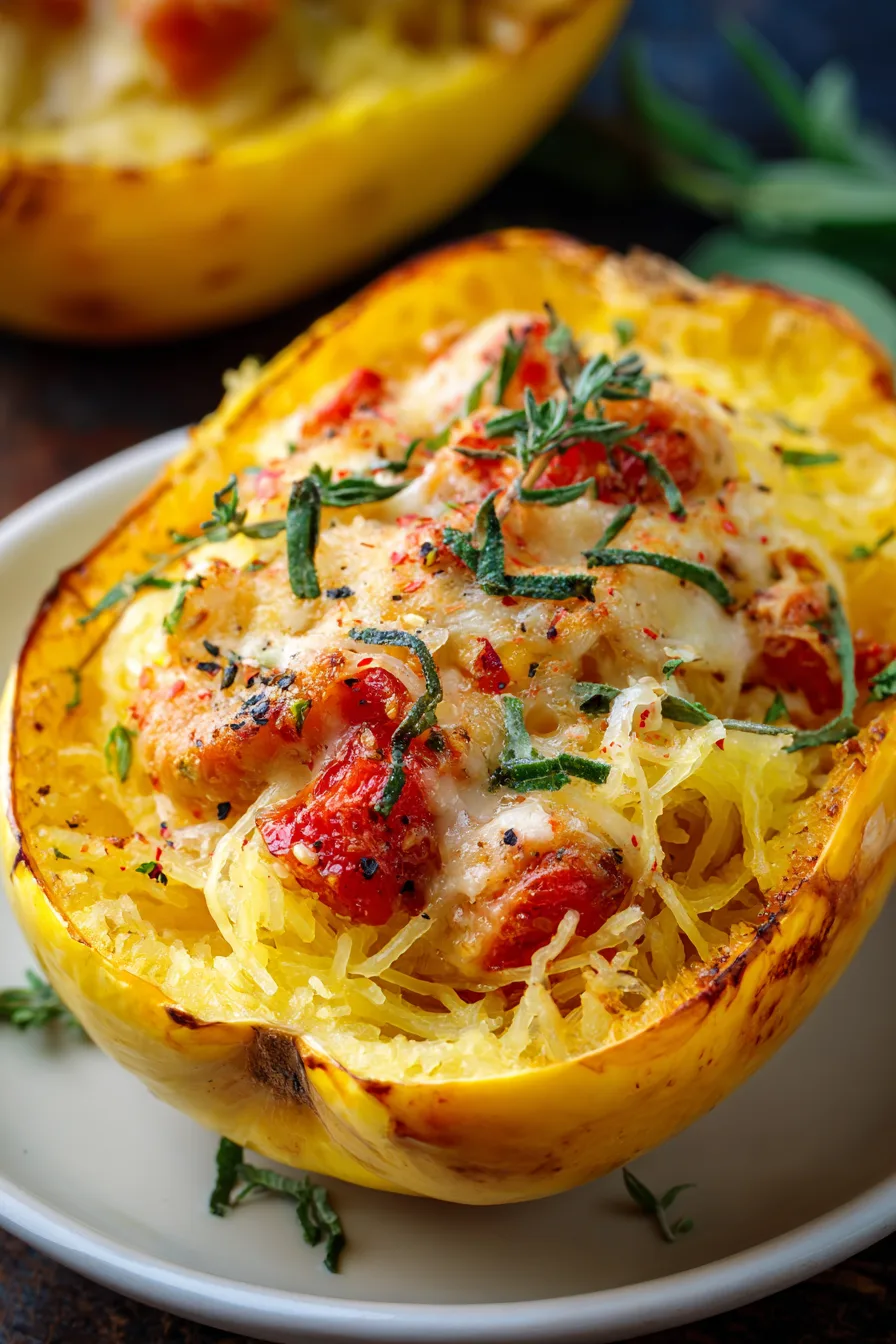
Ingredients List
For the Spaghetti Squash Base:
- 1 large spaghetti squash (3-4 pounds), halved lengthwise and seeded
- 3 tablespoons extra virgin olive oil, divided
- 1 teaspoon sea salt
- ½ teaspoon freshly ground black pepper
For the Mediterranean Sauce:
- 1 medium yellow onion, diced (substitute: shallots for milder flavor)
- 4 cloves garlic, minced
- 1 red bell pepper, julienned
- 1 zucchini, sliced into half-moons
- 1 cup cherry tomatoes, halved
- ¼ cup sun-dried tomatoes, chopped (oil-packed, drained)
- 2 cups low-sodium vegetable broth
- 2 tablespoons tomato paste
- 1 teaspoon dried oregano
- 1 teaspoon dried basil
- ½ teaspoon smoked paprika
For the Finishing Touches:
- ½ cup fresh basil leaves, torn
- ¼ cup pine nuts, toasted (substitute: chopped almonds or walnuts)
- ¼ cup freshly grated Parmesan cheese (optional for vegan version)
- 2 tablespoons fresh lemon juice
- Red pepper flakes to taste
Timing
Preparation Time: 15 minutes
Cooking Time: 45 minutes
Total Time: 60 minutes
This recipe delivers restaurant-quality results in 25% less time than traditional roasted vegetable medleys, making it ideal for weeknight dinners. The hands-on preparation requires only 15 minutes, while the oven does most of the work.
Step-by-Step Instructions
Step 1: Prepare the Spaghetti Squash Foundation
Preheat your oven to 425°F (220°C). Cut the spaghetti squash in half lengthwise and scoop out all seeds and pulp using a sturdy spoon. Brush the cut surfaces with 1 tablespoon olive oil and season generously with salt and pepper. Place cut-side down on a parchment-lined baking sheet and roast for 35-40 minutes until the flesh easily separates into strands when tested with a fork.
Step 2: Create the Aromatic Base
While the squash roasts, heat 2 tablespoons olive oil in a large skillet over medium heat. Add diced onion and cook for 4-5 minutes until translucent and fragrant. The key here is patience – properly caramelized onions create the flavor foundation that makes this dish extraordinary.
Step 3: Build the Mediterranean Medley
Add minced garlic to the skillet and cook for 30 seconds until aromatic. Incorporate bell pepper and zucchini, cooking for 6-8 minutes until vegetables are tender-crisp. This timing ensures optimal texture – vegetables that are cooked through but still retain a satisfying bite.
Step 4: Develop the Rich Sauce
Stir in cherry tomatoes, sun-dried tomatoes, and tomato paste. Cook for 2-3 minutes until tomatoes begin to soften and release their juices. Add vegetable broth, oregano, basil, and smoked paprika. Simmer for 10-12 minutes until the sauce reduces by one-third and develops a rich, concentrated flavor.
Step 5: Combine and Finish
Once the spaghetti squash is tender, use a fork to scrape the flesh into long strands. Add the squash strands directly to the skillet with the Mediterranean sauce. Toss gently for 2-3 minutes, allowing the flavors to meld. Remove from heat and stir in fresh basil, lemon juice, and half the pine nuts.
Nutritional Information
This powerhouse recipe delivers exceptional nutritional value per serving:
- Calories: 185 per serving (serves 4)
- Carbohydrates: 22g (77% fewer than traditional pasta dishes)
- Fiber: 6g (24% of daily recommended intake)
- Protein: 5g
- Vitamin C: 42% DV
- Vitamin A: 28% DV
- Folate: 15% DV
- Potassium: 448mg
The high fiber content promotes satiety while supporting digestive health, making this an ideal choice for weight management goals.
Healthier Alternatives for the Recipe
Transform this already nutritious dish to meet specific dietary needs:
- Protein Boost: Add 1 cup cooked white beans or chickpeas for an additional 8g protein per serving
- Vegan Version: Omit Parmesan and add 2 tablespoons nutritional yeast for umami depth
- Lower Sodium: Use homemade vegetable broth and increase herbs by 50% for flavor compensation
- Keto-Friendly: Add ½ cup heavy cream to the sauce and increase olive oil to 4 tablespoons
- Anti-Inflammatory: Include 1 teaspoon fresh turmeric and 1 tablespoon fresh ginger
Serving Suggestions
Elevate your presentation with these creative serving ideas:
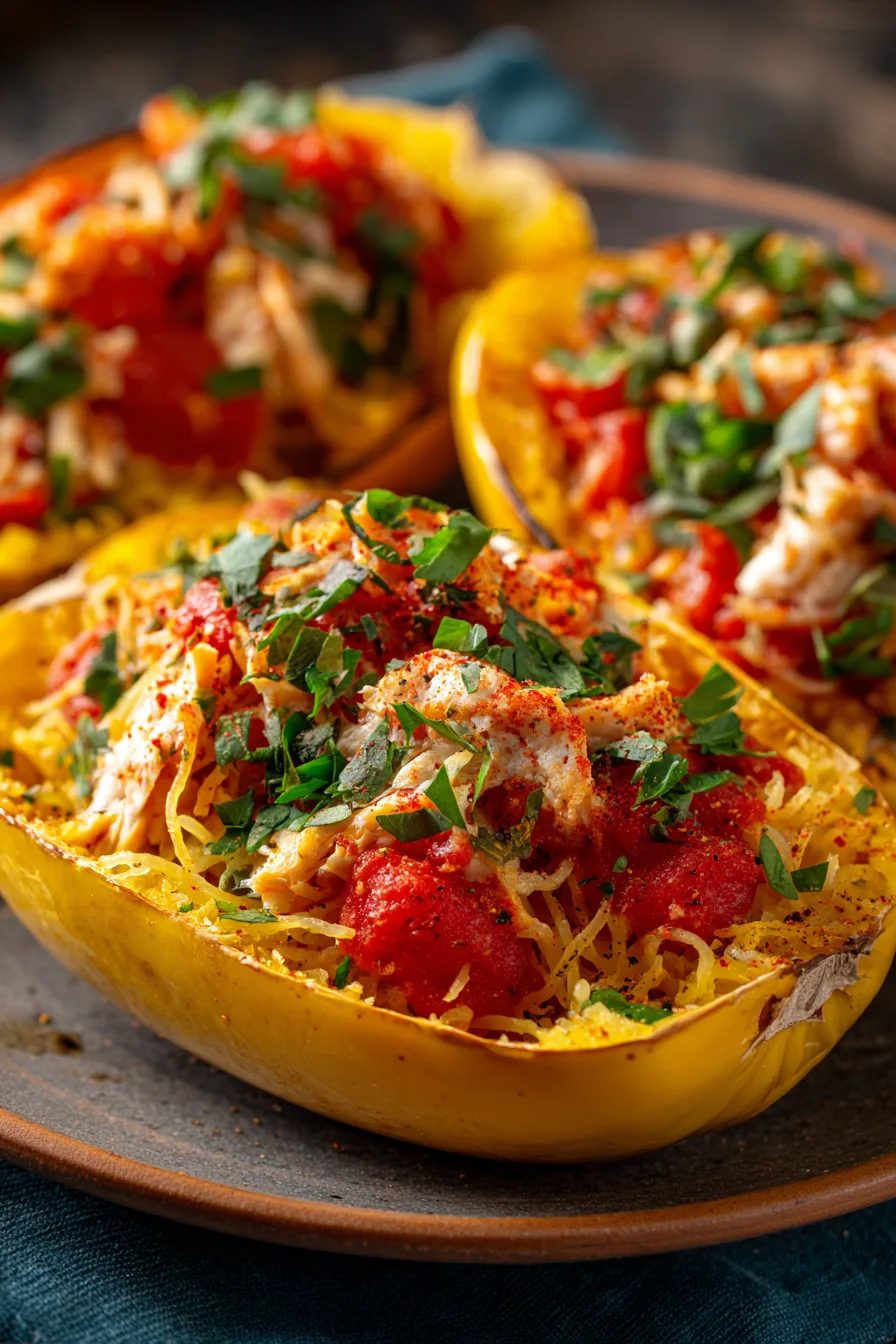
- Family Style: Serve directly from the hollowed squash shells for dramatic presentation
- Individual Portions: Twist the squash strands into nests using a large fork and top with sauce
- Mediterranean Feast: Pair with warm pita bread, hummus, and a crisp cucumber salad
- Protein Addition: Top with grilled chicken, salmon, or turkey meatballs for heartier appetites
- Seasonal Variation: Garnish with pomegranate seeds and mint in winter, fresh corn in summer
Common Mistakes to Avoid
Overcooking the Squash: Test doneness at 35 minutes – overcooked squash becomes mushy and loses its appealing texture.
Underseasoning: Spaghetti squash has a mild flavor that requires generous seasoning. Season each component separately for optimal taste.
Crowding the Pan: Cook vegetables in batches if necessary to ensure proper caramelization rather than steaming.
Skipping the Resting Period: Allow the finished dish to rest for 3-4 minutes before serving to let flavors meld completely.
Storing Tips for the Recipe
Refrigeration: Store leftovers in airtight containers for up to 4 days. The flavors actually improve overnight as they continue to meld.
Freezing: Freeze portions in freezer-safe containers for up to 3 months. Thaw overnight in refrigerator before reheating.
Reheating: Warm gently in a covered skillet over medium-low heat, adding 1-2 tablespoons vegetable broth if needed to prevent sticking.
Meal Prep: Roast multiple squashes on Sunday and store the strands separately from sauce for quick weeknight assembly.
FAQs
Q: Can I prepare this recipe ahead of time?
A: Absolutely! Roast the spaghetti squash and prepare the sauce up to 2 days in advance. Store separately and combine when ready to serve.
Q: How do I know when spaghetti squash is perfectly cooked?
A: The flesh should separate easily into long strands when scraped with a fork, but still maintain some firmness. It should not be mushy or waterlogged.
Q: What’s the best way to cut spaghetti squash safely?
A: Pierce the whole squash several times with a knife tip, then microwave for 2-3 minutes to soften slightly before cutting. Use a sharp, heavy knife and cut slowly with steady pressure.
Q: Can I make this recipe oil-free?
A: Yes! Roast the squash using vegetable broth instead of oil, and sauté vegetables in broth or water, adding small amounts as needed to prevent sticking.
This delicious and healthy spaghetti squash recipe for dinner proves that nutritious meals can be both satisfying and flavorful, creating a new weeknight favorite that your family will request again and again.