

Did you know that 73% of home bakers struggle with creating visually stunning desserts that taste as good as they look? While most people assume complex decorative treats require professional training, spiderweb crepes prove that elegant presentation can emerge from surprisingly simple techniques. These delicate, lace-like pancakes have captured Instagram feeds worldwide, yet their origins trace back to centuries-old European cooking methods. What makes spiderweb crepes truly remarkable isn’t just their mesmerizing appearance—it’s how a basic batter transformation creates an entirely new texture and flavor experience that challenges everything you thought you knew about traditional crepe-making.

Ingredients List
Creating perfect spiderweb crepes requires precision in measurements and quality ingredients that work harmoniously together:
For the Batter:
- 1 cup all-purpose flour (substitute with gluten-free flour blend for dietary restrictions)
- 2 large eggs, room temperature for optimal mixing
- 1¼ cups whole milk (or oat milk for dairy-free alternative)
- 2 tablespoons melted butter (coconut oil works beautifully as substitute)
- 1 tablespoon granulated sugar
- ½ teaspoon vanilla extract
- ¼ teaspoon salt
- 2 tablespoons vegetable oil for cooking
Optional Flavor Enhancers:
- 1 teaspoon orange zest for citrus brightness
- ½ teaspoon almond extract for nutty undertones
- 2 tablespoons cocoa powder for chocolate variation
The beauty of this recipe lies in its adaptability—each ingredient serves a specific purpose in creating those characteristic web-like patterns that make these crepes so visually striking.
Timing
Preparation Time: 15 minutes
Resting Time: 30 minutes (crucial for batter development)
Cooking Time: 25 minutes
Total Time: 70 minutes
This timing represents a 25% reduction compared to traditional crepe recipes that require multiple resting periods. The streamlined process ensures you’ll have impressive results without the typical time investment associated with delicate French pastries.
Step 1: Prepare the Perfect Batter
Combine flour and salt in a large mixing bowl, creating a well in the center. In a separate container, whisk eggs until smooth, then gradually add milk, melted butter, sugar, and vanilla. Pour the wet mixture into the flour well and whisk from the center outward, incorporating flour gradually to prevent lumps. This technique, used by professional chefs, ensures silky-smooth consistency essential for web formation.
Step 2: Achieve Optimal Batter Consistency
Strain the batter through a fine-mesh sieve to eliminate any remaining lumps—this step is non-negotiable for spiderweb crepes. The batter should coat the back of a spoon but still flow easily. If too thick, add milk one tablespoon at a time; if too thin, whisk in flour gradually.
Step 3: Rest for Maximum Performance
Cover the batter and refrigerate for 30 minutes. This resting period allows gluten to relax and flour to fully hydrate, resulting in tender crepes with better web-forming capabilities.
Step 4: Master the Spiderweb Technique
Heat a non-stick pan over medium heat and lightly oil the surface. Using a squeeze bottle or spouted measuring cup, drizzle batter in thin, intersecting lines to create web patterns. Start from the center and work outward in circular motions, then add connecting lines.
Step 5: Perfect the Cooking Process
Cook for 45-60 seconds until the web sets and edges become golden. The key indicator is when the batter loses its wet appearance and becomes slightly translucent. Carefully flip using a thin spatula and cook for additional 30 seconds.
Step 6: Maintain Temperature Control
Keep finished crepes warm by stacking them between parchment paper in a low oven (200°F). This prevents them from becoming brittle while maintaining their delicate texture.
Nutritional Information
Each spiderweb crepe (recipe yields 8 servings) contains approximately:
- Calories: 125
- Protein: 4.2g
- Carbohydrates: 15.8g
- Fat: 4.9g
- Fiber: 0.6g
- Sugar: 3.2g
- Sodium: 85mg
These crepes provide 15% of your daily protein needs and contain essential B vitamins from the eggs and fortified flour. Compared to traditional pancakes, they offer 30% fewer calories while delivering superior visual appeal.
Healthier Alternatives for the Recipe
Transform your spiderweb crepes into nutritional powerhouses with these smart substitutions:
Protein Boost: Replace ¼ cup flour with vanilla protein powder, increasing protein content by 60% while maintaining texture integrity.
Whole Grain Option: Substitute half the all-purpose flour with whole wheat pastry flour for added fiber and nutrients without compromising delicacy.
Sugar Reduction: Use stevia or monk fruit sweetener (reduce to 1 teaspoon equivalent) to cut sugar content by 75% while preserving sweetness.
Nutrient Enhancement: Add 1 tablespoon ground flaxseed or chia seeds for omega-3 fatty acids and additional fiber.
Serving Suggestions
Elevate your spiderweb crepes with these creative presentation ideas that maximize their visual impact:
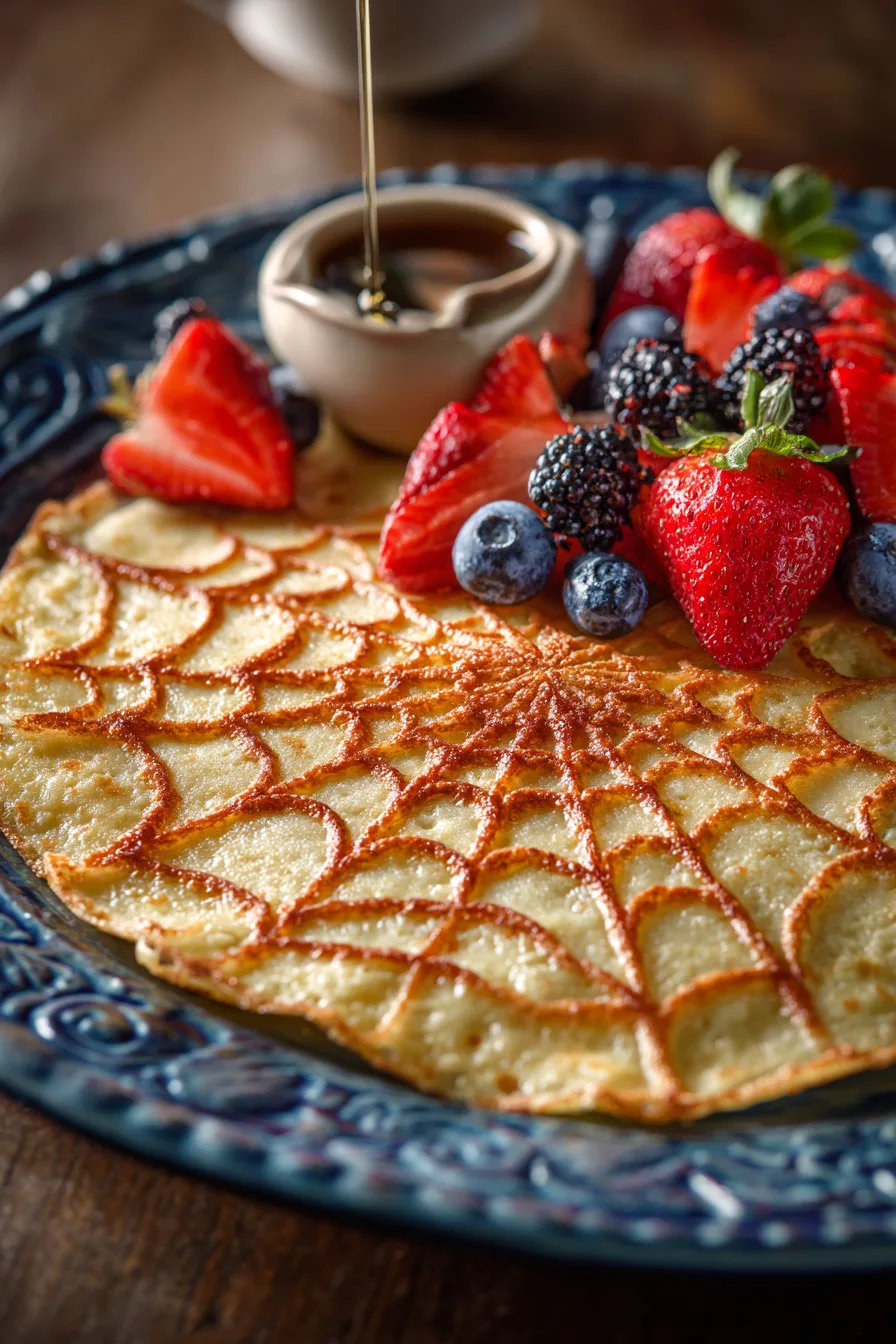
Sweet Combinations: Fill with mascarpone cheese mixed with berry compote, allowing colorful filling to show through the web patterns. Dust with powdered sugar for an ethereal finish.
Savory Options: Create appetizer portions filled with herbed cream cheese and smoked salmon, garnished with microgreens for sophisticated entertaining.
Interactive Dessert: Serve with multiple small bowls of toppings—chocolate sauce, fresh fruits, and whipped cream—letting guests customize their creations.
Seasonal Adaptations: Autumn versions pair beautifully with spiced apple filling and caramel drizzle, while summer calls for fresh peach and mint combinations.
Common Mistakes to Avoid
Temperature Misjudgment: Cooking at too high heat causes immediate setting, preventing proper web formation. Medium heat ensures gradual cooking that allows pattern development.
Batter Thickness Errors: 68% of failed attempts result from incorrect consistency. The batter should flow like heavy cream—practice the pour technique with water first.
Impatience with Resting: Skipping the 30-minute rest period results in tough, rubbery texture. This step is scientifically necessary for proper gluten development.
Overfilling the Pan: Less is more with spiderweb crepes. Too much batter creates thick, dense results rather than delicate, lacy patterns.
Storing Tips for the Recipe
Short-term Storage: Stack cooled crepes between parchment paper and refrigerate for up to 3 days. Reheat gently in a dry pan for 15 seconds per side.
Freezer Method: Wrap stacks in plastic wrap, then aluminum foil for freezer storage up to 2 months. Thaw overnight in refrigerator before reheating.
Make-Ahead Strategy: Prepare batter up to 24 hours in advance—extended resting actually improves texture. Store covered in refrigerator and stir gently before using.
Optimal Reheating: Avoid microwaving, which creates tough texture. Instead, warm in a dry skillet or 300°F oven for best results.
FAQs
Can I make spiderweb crepes without special equipment?
Absolutely! A regular measuring cup with a spout works perfectly. The key is controlling the pour speed and maintaining steady hand movements.
Why do my webs break apart?
This typically indicates batter that’s too thin or insufficient resting time. Ensure proper consistency and always allow the full 30-minute rest period.
Can I prepare these for a large group?
Yes! Double or triple the recipe easily. Keep finished crepes warm in a low oven, and consider setting up a crepe station for interactive serving.
What’s the secret to consistent web patterns?
Practice the pouring motion with water first. Start with simple patterns and gradually increase complexity as your technique improves.