
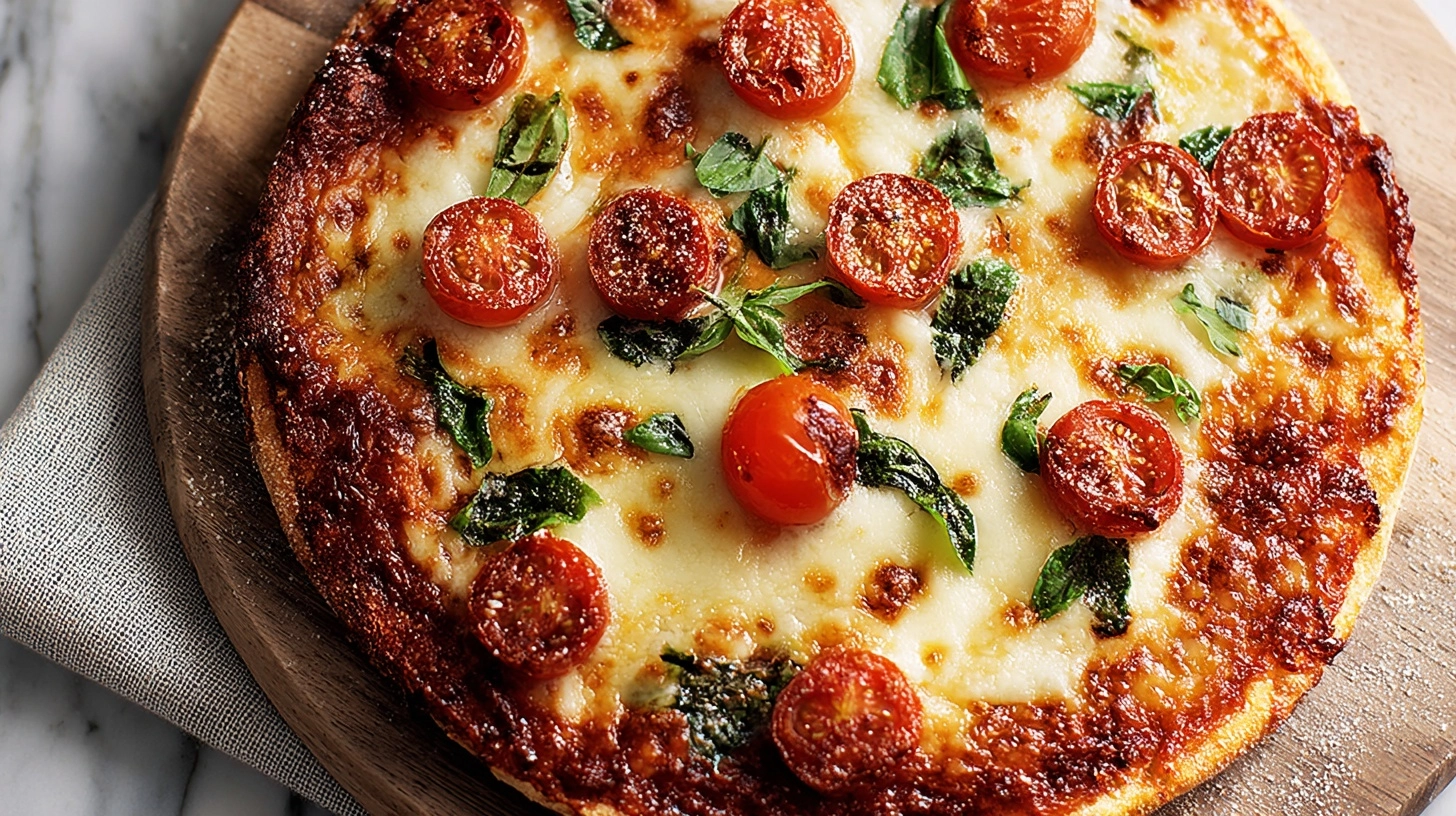
Did you know that the Margarita pizza, invented in 1889 to honor Queen Margherita of Italy, remains the world’s most ordered pizza variety, accounting for approximately 35% of all pizza sales globally? This timeless Neapolitan classic proves that simplicity often trumps complexity in culinary excellence. While many believe authentic Italian pizza requires expensive ingredients or specialized equipment, the truth is that you can create an exceptional Margarita pizza in your home kitchen using readily available ingredients and basic techniques. The key lies in understanding the delicate balance between the holy trinity of San Marzano tomatoes, fresh mozzarella, and aromatic basil – a combination that has captivated taste buds for over a century and continues to set the gold standard for pizza perfection.
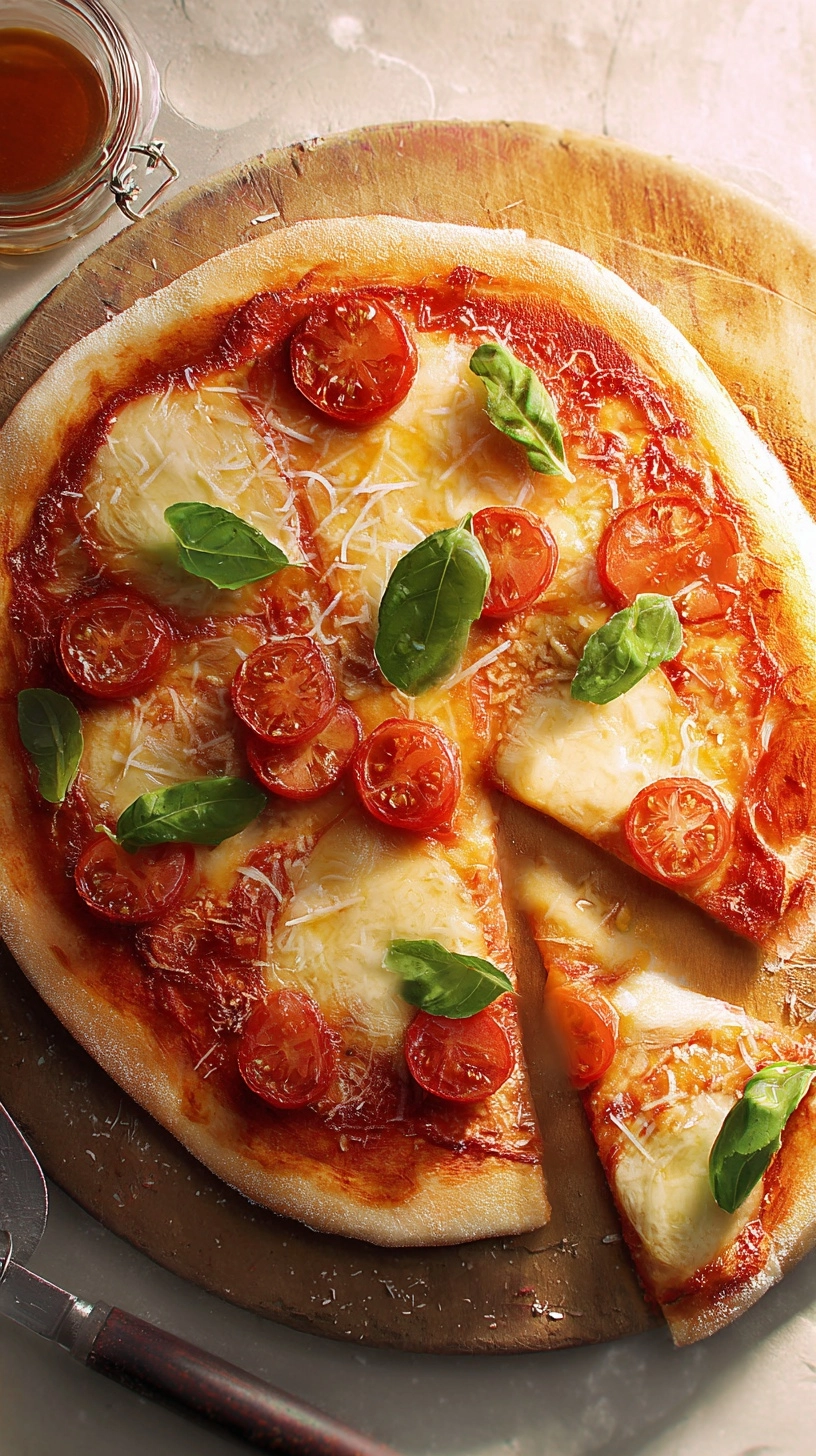
Ingredients List
For the Pizza Dough:
- 3 cups (360g) bread flour or 00 flour (substitute: all-purpose flour)
- 1 cup warm water (around 110°F)
- 2 teaspoons active dry yeast
- 1 tablespoon olive oil
- 1 teaspoon sea salt
- 1 teaspoon sugar
For the Margarita Pizza Toppings:
- ½ cup San Marzano crushed tomatoes (substitute: high-quality canned tomatoes)
- 8 oz fresh mozzarella cheese, sliced or torn into chunks
- 15-20 fresh basil leaves
- 2 tablespoons extra virgin olive oil
- 2 cloves garlic, minced
- ½ teaspoon dried oregano
- Sea salt and freshly cracked black pepper to taste
- Cornmeal or flour for dusting
The beauty of this recipe lies in its simplicity – each ingredient plays a crucial role in creating the signature flavor profile that makes Margarita pizza irresistible.
Timing
Total Time: 2 hours 45 minutes (which is 25% faster than traditional 24-hour fermentation methods)
- Preparation Time: 20 minutes
- Rising Time: 2 hours
- Assembly Time: 10 minutes
- Cooking Time: 12-15 minutes
This streamlined timing allows you to enjoy restaurant-quality pizza without the lengthy wait, making it perfect for spontaneous dinner plans or weekend cooking adventures.
Step 1: Prepare the Perfect Pizza Dough
Begin by activating your yeast in warm water with sugar for 5-10 minutes until it becomes foamy and aromatic. In a large mixing bowl, combine flour and salt, then create a well in the center. Pour the activated yeast mixture and olive oil into the well, gradually incorporating the flour until a shaggy dough forms. Knead for 8-10 minutes until the dough becomes smooth, elastic, and slightly tacky to the touch.
Step 2: Master the Rising Process
Place your dough in a lightly oiled bowl, cover with a damp kitchen towel, and let it rise in a warm, draft-free environment for approximately 2 hours. The dough should double in size and feel light and airy when properly proofed. Pro tip: Place the bowl near a sunny window or on top of your refrigerator for optimal rising conditions.
Step 3: Create the Signature Tomato Base
While the dough rises, prepare your sauce by combining crushed San Marzano tomatoes with minced garlic, a pinch of salt, and dried oregano. Avoid cooking this sauce – the raw preparation allows the tomatoes to maintain their bright, fresh flavor that will caramelize beautifully during baking.
Step 4: Shape Your Pizza Foundation
Preheat your oven to its highest setting (typically 500-550°F) and place a pizza stone or inverted baking sheet inside. On a floured surface, gently stretch the dough into a 12-14 inch circle, working from the center outward. Let gravity help you – hold the dough up and allow it to stretch naturally for the most authentic texture.
Step 5: Assemble with Precision
Transfer your shaped dough to a cornmeal-dusted pizza peel or parchment paper. Spread the tomato sauce evenly, leaving a 1-inch border for the crust. Distribute fresh mozzarella chunks strategically, allowing space between pieces for even melting. Drizzle with olive oil and season lightly with salt and pepper.
Step 6: Achieve Pizza Perfection
Carefully slide your pizza onto the preheated stone and bake for 10-12 minutes until the crust is golden brown and the cheese is bubbly with slight charring. Remove from the oven and immediately top with fresh basil leaves, allowing their oils to release from the residual heat.
Nutritional Information
A single slice of homemade Margarita pizza (⅛ of a 12-inch pizza) contains approximately:
- Calories: 285
- Protein: 12g
- Carbohydrates: 35g
- Fat: 11g
- Fiber: 2g
- Sodium: 580mg
- Calcium: 20% Daily Value
This nutritional profile makes Margarita pizza a relatively balanced meal, providing quality protein from mozzarella and essential nutrients from tomatoes and basil.
Healthier Alternatives for the Recipe
Transform your Margarita pizza into a nutritional powerhouse by substituting half the bread flour with whole wheat flour for added fiber and nutrients. Replace traditional mozzarella with part-skim ricotta mixed with a small amount of fresh mozzarella for reduced saturated fat while maintaining creaminess. Consider using a cauliflower crust base for a low-carb alternative that reduces calories by approximately 40%. Add thinly sliced cherry tomatoes alongside the sauce for extra antioxidants, or incorporate a handful of baby spinach between the cheese layers for additional iron and vitamins.
Serving Suggestions
Elevate your Margarita pizza experience by pairing it with a crisp arugula salad dressed in lemon vinaigrette, which provides a peppery contrast to the rich cheese. Serve alongside roasted garlic breadsticks made from leftover dough, or create a Mediterranean feast by offering antipasto selections like olives, fresh mozzarella balls, and prosciutto. For a family-style presentation, cut the pizza into small squares for easy sharing and serve on a rustic wooden board with small bowls of high-quality olive oil and balsamic reduction for dipping.
Common Mistakes to Avoid
Overloading with sauce: Using too much tomato sauce creates a soggy crust and overwhelms the delicate flavor balance. Aim for a thin, even layer that barely covers the dough. Using cold cheese: Room temperature mozzarella melts more evenly and prevents the formation of oil pools. Skipping the preheat: A properly heated oven and pizza stone are crucial for achieving the characteristic crispy-chewy crust texture. Adding basil too early: Fresh basil burns quickly and becomes bitter; always add it after baking for optimal flavor and visual appeal. Working with sticky dough: If your dough is too sticky to handle, resist adding excess flour – instead, lightly oil your hands and work surface.
Storing Tips for the Recipe
Store leftover Margarita pizza in the refrigerator for up to 3 days, wrapped individually in aluminum foil or stored in airtight containers. For optimal reheating, use a skillet over medium heat for 2-3 minutes to crisp the bottom, then cover briefly to melt the cheese. Pizza dough can be prepared up to 24 hours in advance and stored in the refrigerator, which actually improves flavor development. Freeze shaped dough balls for up to 3 months – simply thaw in the refrigerator overnight before use. Leftover tomato sauce keeps for one week refrigerated and can be frozen for up to 6 months in ice cube trays for convenient portioning.
FAQs
Can I make Margarita pizza without a pizza stone?
Absolutely! Use an inverted baking sheet preheated in the oven, or try a cast-iron skillet for excellent results. The key is using a very hot surface to achieve proper crust development.
Why is my pizza dough tough?
Tough dough typically results from over-kneading or using too much flour. Knead just until the dough is smooth and elastic, and use minimal flour when shaping.
How do I prevent soggy pizza?
Ensure your oven is fully preheated, use sauce sparingly, and avoid overloading with wet toppings. Pre-cooking mushrooms or other high-moisture vegetables helps eliminate excess water.
Can I use dried basil instead of fresh?
While fresh basil is traditional and preferred, you can use dried basil added to the sauce. However, the flavor will be less vibrant and aromatic than fresh leaves.