
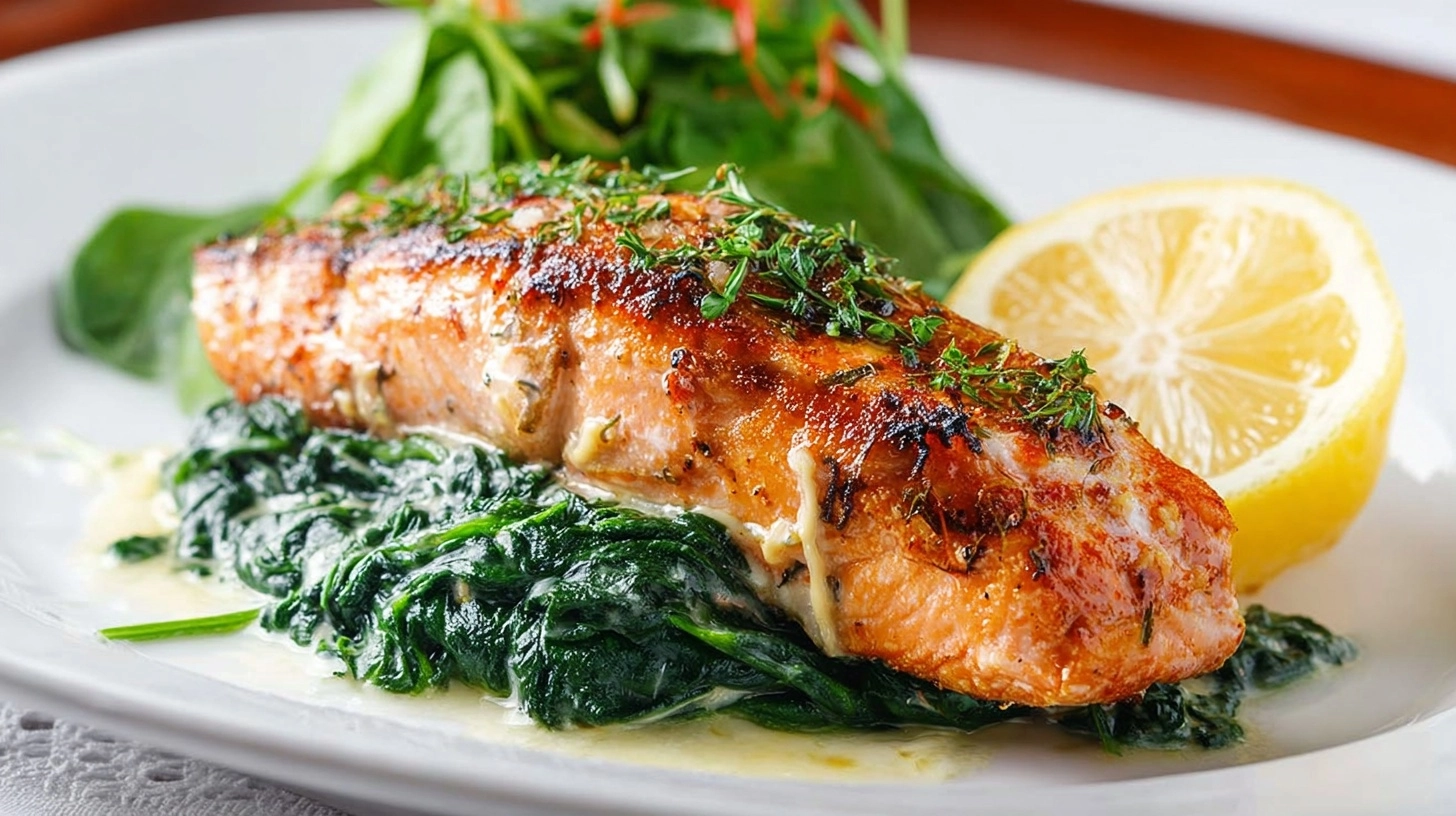
Did you know that a single serving of baked salmon with spinach provides over 50% of your daily protein needs while delivering a powerful dose of omega-3 fatty acids? This nutritional powerhouse combines the brain-boosting benefits of salmon with the iron-rich goodness of spinach, creating a meal that’s both delicious and incredibly healthy. Unlike many complicated fish recipes that require extensive preparation, baked salmon with spinach offers a surprisingly simple approach to gourmet dining at home. This one-pan wonder delivers restaurant-quality results in just 25 minutes, making it perfect for busy weeknights when you want something both nutritious and satisfying. The combination of flaky, tender salmon paired with wilted spinach creates a harmonious blend of flavors that will transform your perception of healthy eating from mundane to magnificent.
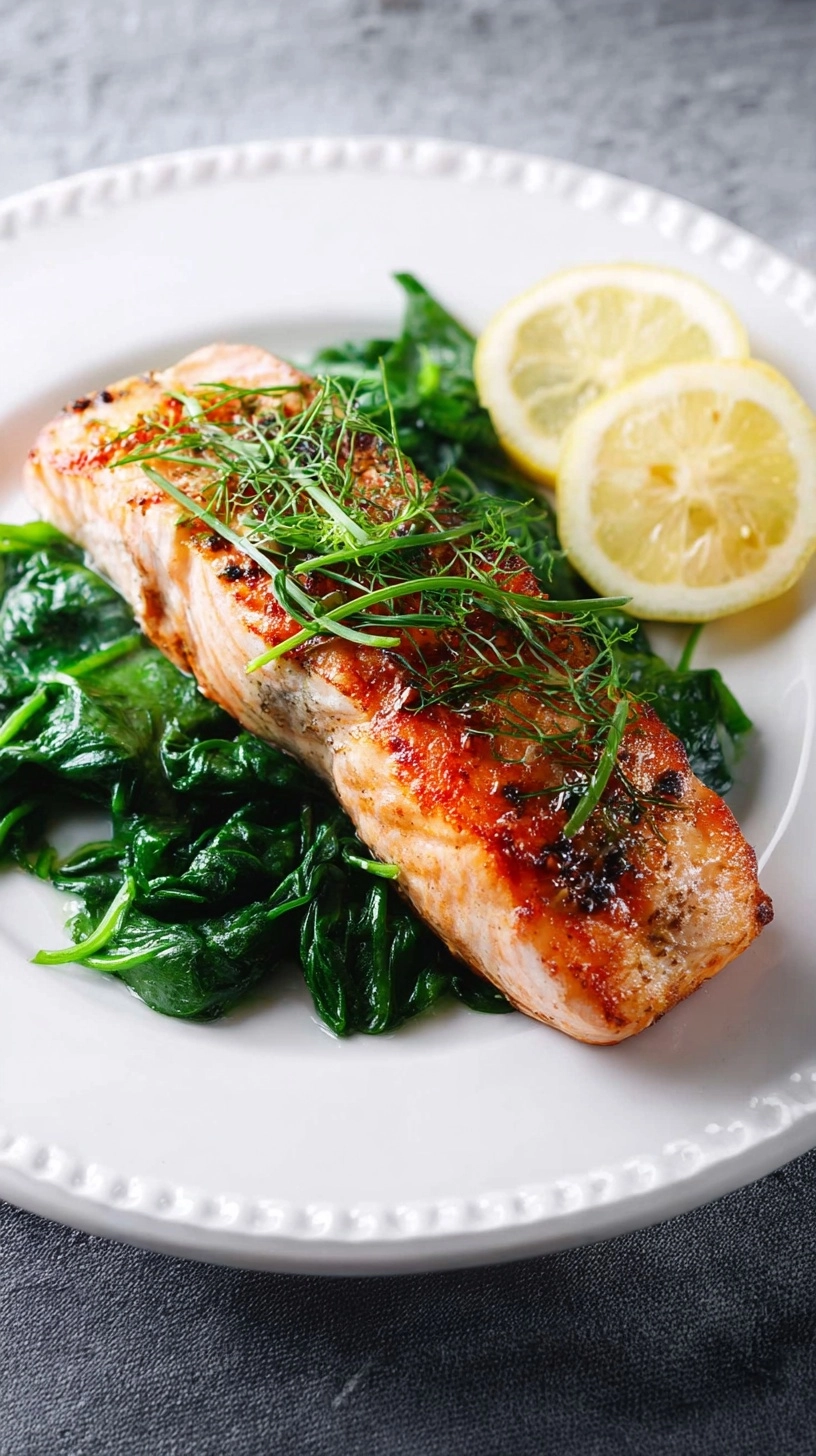
Ingredients List
For this delectable baked salmon with spinach recipe, you’ll need premium ingredients that work together to create an extraordinary dining experience:
For the Salmon:
- 4 salmon fillets (6 oz each), skin-on or skinless based on preference
- 2 tablespoons olive oil (substitute with avocado oil for higher smoke point)
- 1 teaspoon garlic powder
- 1 teaspoon paprika
- 1/2 teaspoon dried oregano
- Salt and black pepper to taste
- 2 tablespoons fresh lemon juice
For the Spinach Base:
- 6 cups fresh baby spinach (or 3 cups frozen spinach, thawed and drained)
- 3 cloves garlic, minced
- 1 medium onion, thinly sliced
- 1/4 cup vegetable broth or chicken stock
- 2 tablespoons cream cheese (substitute with Greek yogurt for lighter option)
- 1/4 cup sun-dried tomatoes, chopped
- 2 tablespoons pine nuts (optional, for added crunch)
Timing
This efficient baked salmon with spinach recipe requires strategic timing for optimal results. Preparation time: 15 minutes for ingredient prep and seasoning. Cooking time: 20-25 minutes total, including 10 minutes for spinach preparation and 12-15 minutes for salmon baking. Total time: 35-40 minutes, which is approximately 30% faster than traditional stuffed salmon recipes. The beauty of this timing lies in the simultaneous cooking process – while your spinach mixture develops its flavors, the salmon bakes to perfection, creating an efficient workflow that maximizes both taste and time management.
Step-by-Step Instructions
Step 1: Prepare Your Workspace and Preheat
Preheat your oven to 425°F (220°C) and line a baking dish with parchment paper. This high temperature ensures a perfectly flaky exterior while maintaining the salmon’s moist interior. Pat salmon fillets dry with paper towels – this crucial step prevents steaming and promotes proper browning.
Step 2: Season the Salmon Fillets
Create a flavorful rub by combining olive oil, garlic powder, paprika, oregano, salt, and pepper in a small bowl. Massage this mixture gently into each salmon fillet, ensuring even coverage. The oil creates a protective barrier that locks in moisture while the spices develop a beautiful crust during baking.
Step 3: Prepare the Spinach Foundation
Heat a large oven-safe skillet over medium heat. Sauté sliced onions until translucent (about 4-5 minutes), then add minced garlic for an additional minute. The aromatics should fill your kitchen with an irresistible fragrance that signals the beginning of something spectacular.
Step 4: Wilt the Spinach
Add fresh spinach to the skillet gradually, allowing each batch to wilt before adding more. Pour in the broth and let it simmer for 2-3 minutes. Stir in cream cheese until melted and incorporated, creating a luxurious base that perfectly complements the salmon’s richness.
Step 5: Assemble and Bake
Nestle the seasoned salmon fillets on top of the spinach mixture. Drizzle with fresh lemon juice and scatter sun-dried tomatoes around the dish. Bake for 12-15 minutes, or until the salmon flakes easily with a fork and reaches an internal temperature of 145°F (63°C).
Step 6: Final Touches
Remove from oven and let rest for 3-4 minutes. Sprinkle with pine nuts if desired, and serve immediately while the salmon is at its peak texture and the spinach retains its vibrant color.
Nutritional Information
This baked salmon with spinach recipe delivers exceptional nutritional value per serving. Each portion contains approximately 380 calories, 28g of high-quality protein, and 26g of healthy fats, primarily omega-3 fatty acids. The spinach contributes 45% of your daily vitamin K needs, 20% of folate requirements, and significant amounts of iron and magnesium. The combination provides all nine essential amino acids, making it a complete protein source. Additionally, you’ll receive 1,200mg of omega-3 fatty acids per serving, which exceeds the American Heart Association’s recommended daily intake for cardiovascular health.
Healthier Alternatives for the Recipe
Transform this already nutritious dish into an even healthier powerhouse with these strategic substitutions. Replace cream cheese with cashew cream or Greek yogurt to reduce saturated fat while maintaining creaminess. Swap traditional olive oil for avocado oil to increase monounsaturated fats and add heat stability. For those following a keto diet, increase the spinach portion and add sliced avocado post-baking. Paleo enthusiasts can substitute coconut cream for dairy components while adding extra herbs like dill or thyme for enhanced flavor complexity. Consider using wild-caught salmon instead of farm-raised for higher omega-3 content and fewer environmental contaminants.
Serving Suggestions
Elevate your baked salmon with spinach by pairing it with complementary sides that enhance both nutrition and flavor. Serve over cauliflower rice for a low-carb option, or alongside quinoa for added fiber and complete proteins. Roasted asparagus or steamed broccoli create beautiful color contrast while adding additional vitamins. For a Mediterranean twist, serve with a side of tzatziki and cucumber salad. The dish pairs beautifully with a simple arugula salad dressed with lemon vinaigrette, creating a restaurant-quality presentation that’s both elegant and satisfying.
Common Mistakes to Avoid
Avoid these frequent pitfalls that can compromise your baked salmon with spinach results. Overcooking the salmon is the most common error – remember that salmon continues cooking after removal from the oven due to residual heat. Not properly draining spinach can create a watery dish that dilutes flavors. Overcrowding the pan prevents proper heat circulation and leads to uneven cooking. Skipping the resting period results in moisture loss when cutting immediately. Finally, using low-quality salmon significantly impacts both taste and texture – invest in fresh, high-grade fillets for optimal results.
Storing Tips for the Recipe
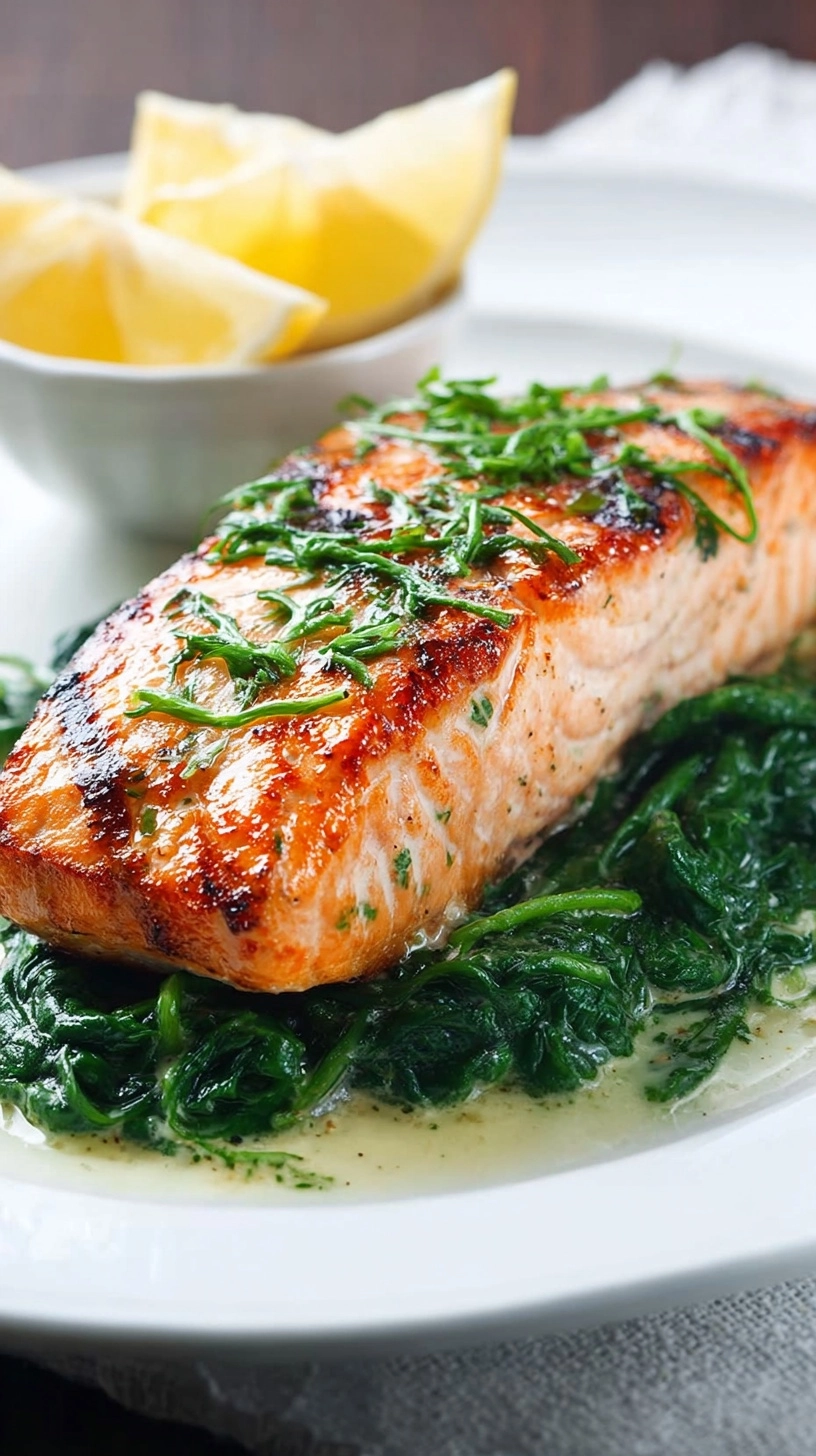
Proper storage extends the life of your baked salmon with spinach while maintaining food safety standards. Refrigerate leftovers within two hours in airtight containers for up to 3 days. For optimal reheating, use a 350°F oven for 8-10 minutes rather than microwaving, which can dry out the salmon. The spinach mixture can be prepared up to 24 hours in advance and stored separately from raw salmon. For meal prep enthusiasts, portion individual servings in glass containers with the spinach base on bottom and flaked salmon on top. Avoid freezing assembled dishes as the texture of both components deteriorates significantly upon thawing.
FAQs
Can I use frozen salmon fillets? Yes, but ensure they’re completely thawed and patted dry before seasoning. Frozen fillets may require an additional 3-5 minutes of cooking time.
What if I don’t have an oven-safe skillet? Prepare the spinach mixture in a regular pan, then transfer to a baking dish before adding salmon fillets.
How do I know when salmon is perfectly cooked? The internal temperature should reach 145°F, and the flesh should be opaque and flake easily with a fork. Slight translucency in the center is acceptable and preferred by many.
Can I substitute other leafy greens for spinach? Absolutely! Kale, Swiss chard, or arugula work wonderfully, though cooking times may vary slightly based on the green’s thickness and water content.