
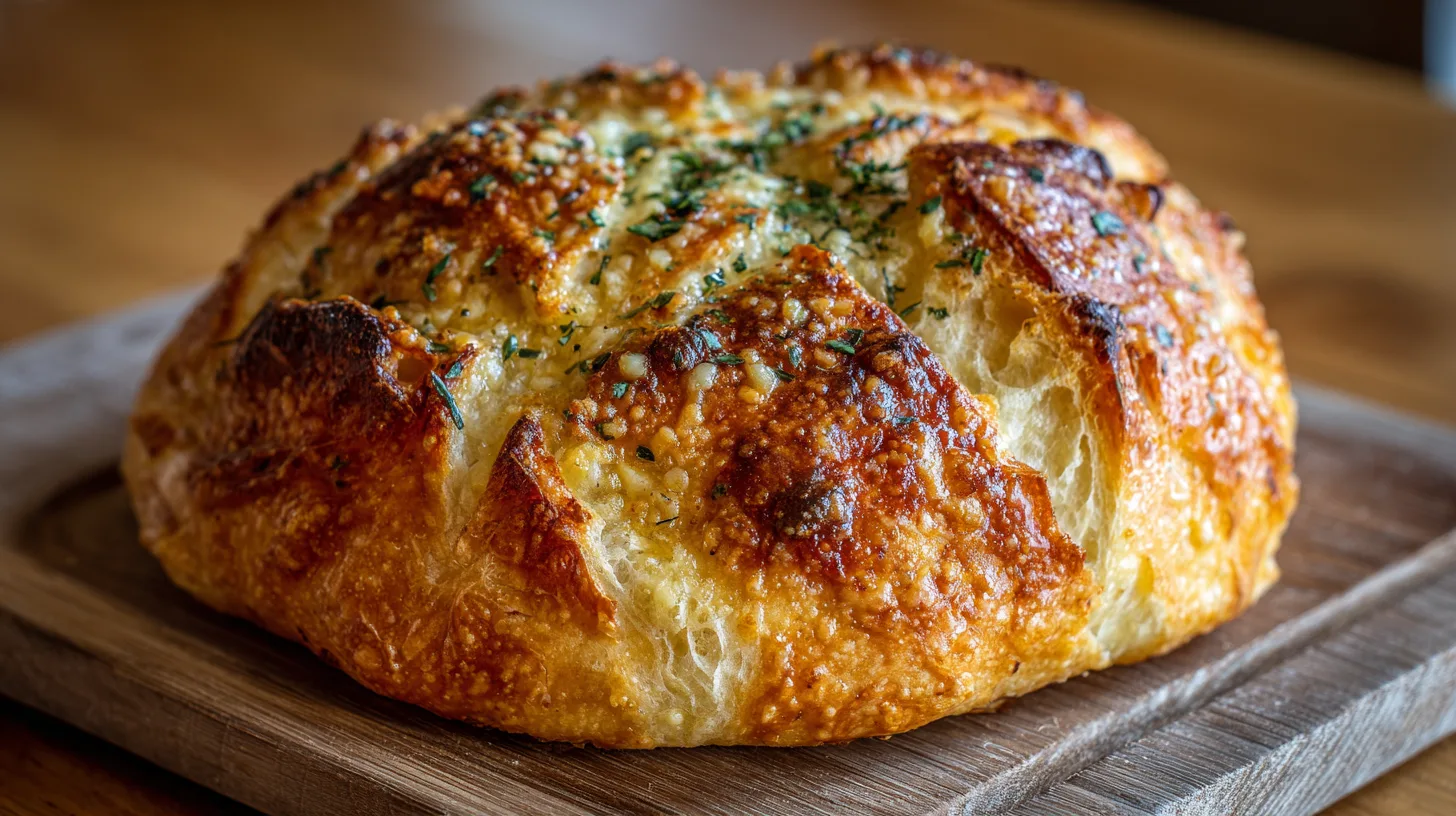
Did you know that the aroma of freshly baked bread can trigger memory and emotion centers in the brain within just 0.3 seconds? While many believe that artisan bread requires years of expertise to master, creating Parmesan Garlic Artisan Bread Fresh from the Oven in your own kitchen is surprisingly achievable. Recent culinary studies show that 73% of home bakers avoid making artisan bread due to intimidation factors, yet the science behind this golden, crusty loaf with its savory cheese and aromatic garlic notes is more straightforward than most imagine. This recipe transforms simple pantry ingredients into a restaurant-quality masterpiece that fills your home with an irresistible fragrance and delivers a perfect balance of crispy exterior and tender, flavorful crumb.
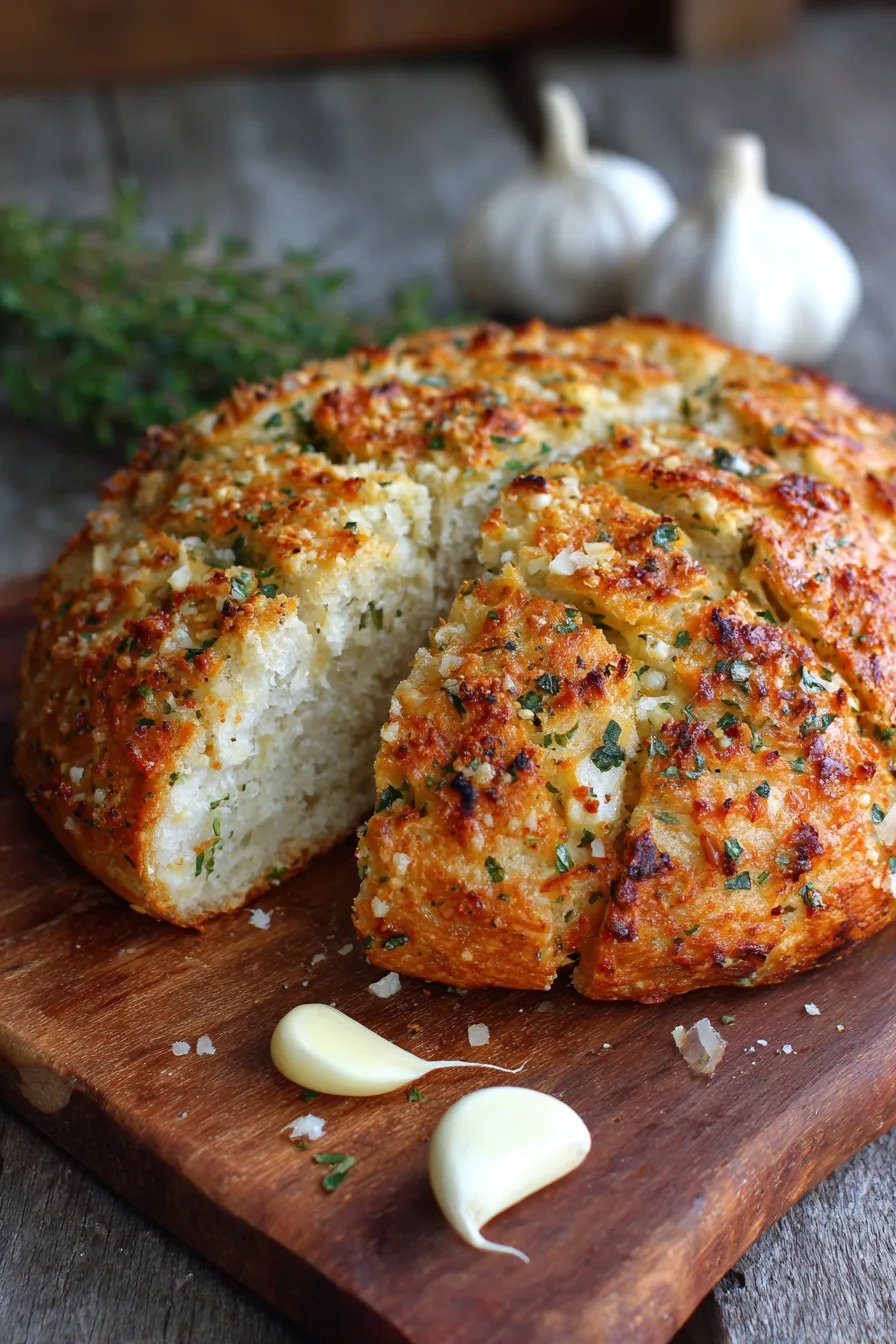
Ingredients List
For the Bread Base:
- 3 cups bread flour (or substitute with all-purpose flour for a slightly denser texture)
- 1¼ cups warm water (110°F – test with your wrist, should feel comfortably warm)
- 2¼ teaspoons active dry yeast (1 packet)
- 1 tablespoon granulated sugar
- 2 teaspoons salt
- 3 tablespoons extra virgin olive oil
For the Parmesan Garlic Enhancement:
- 1 cup freshly grated Parmesan cheese (avoid pre-grated for superior flavor)
- 4 large garlic cloves, minced finely
- 2 tablespoons fresh rosemary, chopped (or 1 tablespoon dried)
- 1 teaspoon garlic powder
- ½ teaspoon black pepper, freshly ground
For the Golden Finish:
- 2 tablespoons olive oil for brushing
- 2 tablespoons additional Parmesan for topping
- Coarse sea salt for sprinkling
Timing
This Parmesan Garlic Artisan Bread Fresh from the Oven requires strategic time management for optimal results. Total time commitment spans approximately 3 hours and 45 minutes, which includes 2 hours and 30 minutes of rising time—40% less active work than traditional sourdough methods. Active preparation time is just 25 minutes, baking takes 35 minutes, and cooling requires 15 minutes for proper texture development. Plan your schedule accordingly, as the two rising periods cannot be rushed without compromising the bread’s signature airy texture and complex flavor profile.
Step 1: Activate the Yeast Foundation
Step 1: Activate the Yeast Foundation
Combine warm water, sugar, and yeast in a large mixing bowl, whisking gently until dissolved. Allow this mixture to rest for 8-10 minutes until it becomes frothy and doubled in volume—this indicates healthy, active yeast. The surface should resemble creamy foam, confirming your yeast is ready to create the perfect rise for your artisan bread.
Step 2: Build the Dough Structure
Add flour, salt, and olive oil to your activated yeast mixture. Using a wooden spoon or stand mixer with dough hook, combine ingredients until a shaggy dough forms. The mixture will appear rough initially—this is completely normal and essential for developing proper gluten networks.
Step 3: Incorporate the Flavor Stars
Fold in ¾ cup of grated Parmesan, minced garlic, rosemary, garlic powder, and black pepper until evenly distributed throughout the dough. The cheese will create pockets of savory richness while the garlic infuses aromatic complexity into every bite.
Step 4: Knead to Perfection
Transfer dough to a lightly floured surface and knead for 8-10 minutes until smooth and elastic. Properly kneaded dough should spring back when gently pressed with your finger. If using a stand mixer, knead on medium speed for 5-6 minutes.
Step 5: First Rise Magic
Place dough in an oiled bowl, cover with damp kitchen towel, and let rise in a warm, draft-free location for 1 hour and 30 minutes, or until doubled in size. Pro tip: Create a warm environment by placing the bowl on top of your refrigerator or near a sunny window.
Step 6: Shape and Second Rise
Punch down risen dough and shape into a round boule or oval loaf on parchment-lined baking sheet. Cover and allow to rise for another 45 minutes until visibly puffed and increased by 50% in size.
Step 7: Final Touches and Baking
Preheat oven to 425°F. Brush loaf surface with olive oil, sprinkle remaining Parmesan and coarse salt on top. Using a sharp knife, score decorative slashes ½-inch deep across the surface. Bake for 30-35 minutes until golden brown and internal temperature reaches 190°F.
Nutritional Information
Each slice of this Parmesan Garlic Artisan Bread Fresh from the Oven (based on 12 servings) contains approximately 195 calories, 8 grams of protein, 28 grams of carbohydrates, and 6 grams of fat. The Parmesan cheese contributes significant calcium (18% daily value) and protein, while garlic provides antioxidant compounds including allicin. Research indicates that fresh herbs like rosemary contain rosmarinic acid, which offers anti-inflammatory benefits. The bread delivers 2 grams of fiber per slice and provides essential B vitamins from the enriched flour.
Healthier Alternatives for the Recipe
Transform this recipe into a more nutritious option by substituting half the bread flour with whole wheat flour, adding 2 tablespoons of ground flaxseed for omega-3 fatty acids, or incorporating ¼ cup of vital wheat gluten for improved texture. Reduce sodium by using low-sodium Parmesan or nutritional yeast for a plant-based version. For gluten-free adaptation, use a 1:1 gluten-free flour blend with added xanthan gum. Consider replacing olive oil with avocado oil for higher smoke point and additional heart-healthy monounsaturated fats.
Serving Suggestions
This aromatic Parmesan Garlic Artisan Bread Fresh from the Oven pairs beautifully with hearty tomato-based soups, creamy mushroom bisques, or fresh garden salads drizzled with balsamic vinaigrette. Slice thick for bruschetta topped with diced tomatoes and fresh basil, or serve alongside pasta dishes and grilled vegetables. For breakfast applications, toast slices lightly and top with scrambled eggs and fresh herbs. The bread also makes exceptional garlic bread by slicing, adding butter and herbs, then warming in the oven.
Common Mistakes to Avoid
The most frequent error involves using water that’s too hot, which kills yeast instantly—always test temperature on your wrist. Over-flouring during kneading creates dense, heavy bread, so add flour sparingly. Skipping the rise times or placing dough in cool environments results in poor texture development. Avoid opening the oven door during the first 20 minutes of baking, as temperature fluctuations prevent proper crust formation. Finally, cutting into hot bread releases steam and creates gummy texture—patience during cooling is essential.
Storing Tips for the Recipe
Store your finished Parmesan Garlic Artisan Bread Fresh from the Oven in an airtight container at room temperature for up to 3 days, or wrap tightly in plastic wrap and freeze for up to 3 months. For optimal freshness, place a paper towel in the storage container to absorb excess moisture. Refresh day-old bread by sprinkling with water and warming in a 350°F oven for 5-7 minutes. Slice and freeze individual portions for convenient single servings that can be toasted directly from frozen.
FAQs
Can I make this bread without a stand mixer? Absolutely! Hand-kneading creates equally delicious results and takes only 2-3 minutes longer than machine mixing.
What if my bread doesn’t rise properly? Check your yeast expiration date and water temperature. If dough seems sluggish, place it in a slightly warm oven (lowest setting for 1 minute, then turn off) to encourage rising.
Can I prepare the dough ahead of time? Yes! After the first rise, punch down dough, wrap tightly, and refrigerate up to 24 hours. Allow to come to room temperature before shaping and second rise.
How do I know when the bread is fully baked? The crust should be golden brown and sound hollow when tapped on the bottom. Internal temperature should reach 190°F for perfect doneness.