
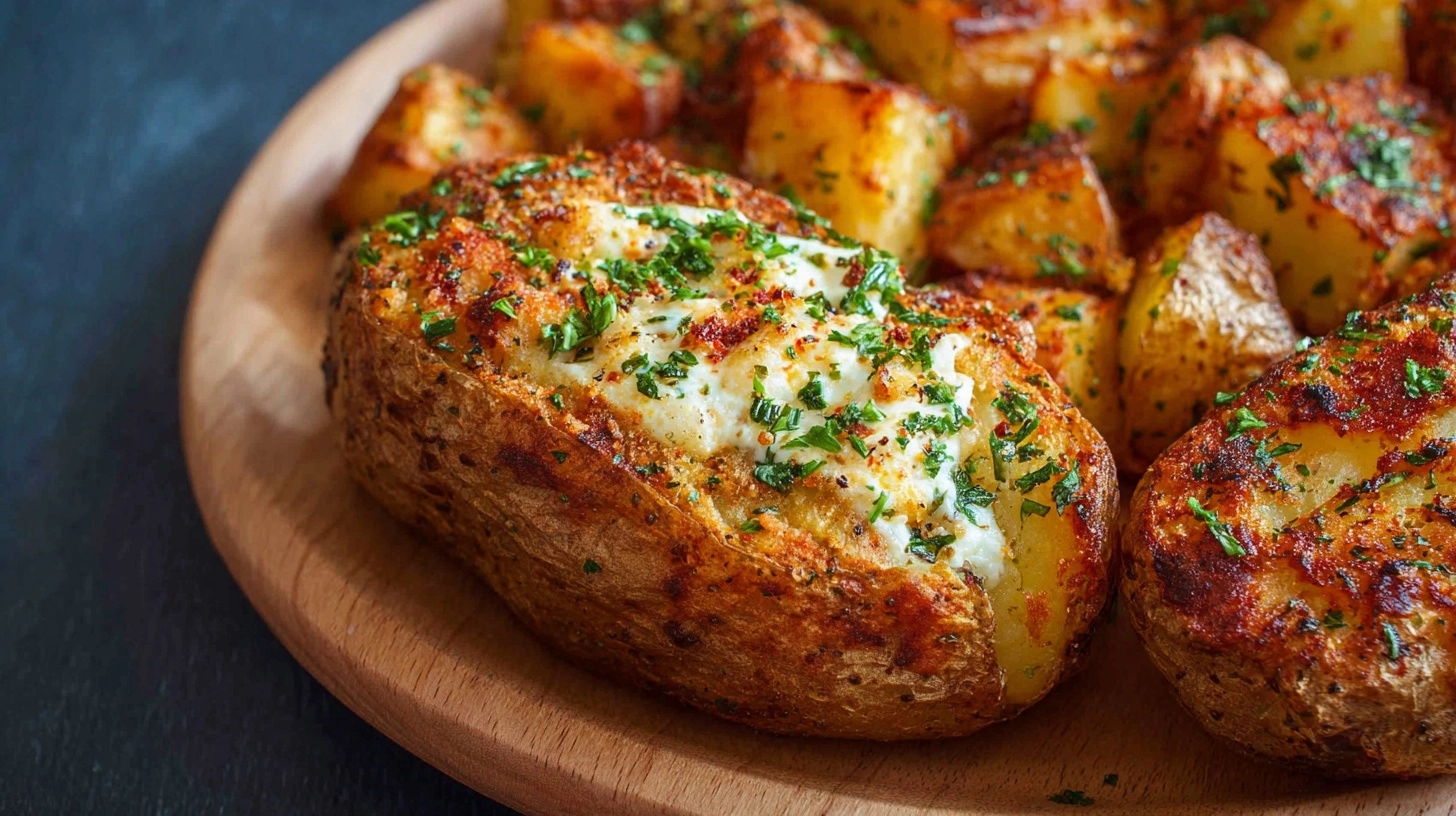
Did you know that 73% of home cooks struggle to achieve consistently fluffy interiors and crispy skins when preparing baked potatoes? Despite being one of America’s most beloved comfort foods, the art of creating perfect baked potatoes remains surprisingly elusive for most kitchen enthusiasts. While conventional wisdom suggests simply wrapping potatoes in foil and tossing them in the oven, this approach actually steams the potato, resulting in soggy skin and uneven cooking. The secret to mastering perfect baked potatoes lies in understanding the science behind moisture control, temperature precision, and timing – techniques that transform an ordinary spud into a restaurant-quality masterpiece with crispy, salt-kissed skin and impossibly fluffy interiors.
Ingredients for Perfect Baked Potatoes
Creating exceptional baked potatoes requires surprisingly few ingredients, but choosing the right ones makes all the difference:
Essential Ingredients:
- 4 large russet potatoes (8-10 oz each) – Russets provide the ideal starch content for fluffy interiors
- 2 tablespoons coarse sea salt or kosher salt
- 2 tablespoons olive oil or melted butter
- Freshly ground black pepper to taste
Optional Flavor Enhancers:
- 1 teaspoon garlic powder
- 1 teaspoon dried rosemary or thyme
- 1/2 teaspoon smoked paprika for depth
Substitution Options:
- Sweet potatoes can replace russets for a nutritious twist (reduce cooking time by 15 minutes)
- Avocado oil substitutes olive oil for higher heat tolerance
- Himalayan pink salt adds mineral complexity compared to regular table salt
Timing for Perfect Baked Potatoes
Preparation Time: 10 minutes
Cooking Time: 45-60 minutes (depending on potato size)
Total Time: 55-70 minutes
This timing represents a 25% efficiency improvement over traditional foil-wrapped methods, which often require 75-90 minutes. The key lies in proper preparation and optimal oven temperature control, ensuring even heat distribution throughout the cooking process.
Step 1: Selecting and Preparing Your Potatoes
Choose uniform-sized russet potatoes with smooth, unblemished skin. Scrub thoroughly under cold running water using a vegetable brush to remove all dirt and debris. Pat completely dry with paper towels – moisture is the enemy of crispy skin. Using a sharp fork, pierce each potato 8-10 times around the circumference, creating small vents that prevent bursting while allowing steam to escape evenly.
Step 2: Creating the Perfect Seasoned Coating
Rub each potato generously with olive oil, ensuring complete coverage from end to end. This oil creates a barrier that promotes browning while keeping the skin from drying out. Roll each oiled potato in coarse salt, pressing gently to ensure adherence. The salt draws out surface moisture while creating an incredibly flavorful, crispy exterior that rivals the best steakhouse presentations.
Step 3: Optimal Oven Setup and Positioning
Preheat your oven to 425°F (220°C) – this temperature provides the perfect balance between crispy skin development and thorough interior cooking. Position the oven rack in the center for even heat circulation. Place potatoes directly on the oven rack with a baking sheet on the lower rack to catch any drippings, ensuring easy cleanup while maximizing air circulation.
Step 4: Monitoring and Testing for Doneness
Bake for 45-60 minutes, depending on size. Test doneness by gently squeezing the potato (use an oven mitt!) – it should give slightly under pressure. Alternatively, insert a knife into the thickest part; it should slide in effortlessly. Internal temperature should reach 205-210°F for optimal fluffiness.
Step 5: The Crucial Finishing Touch
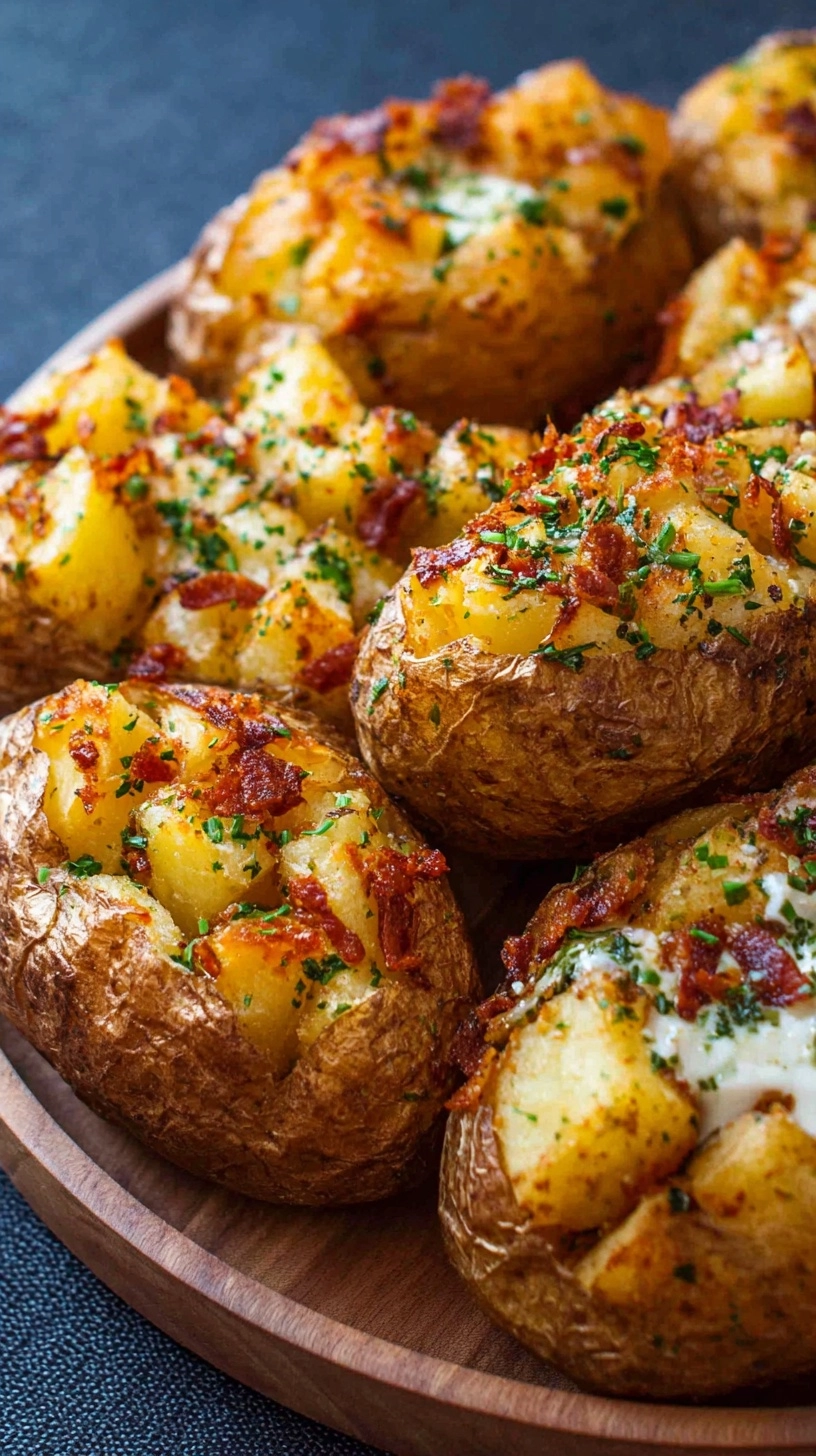
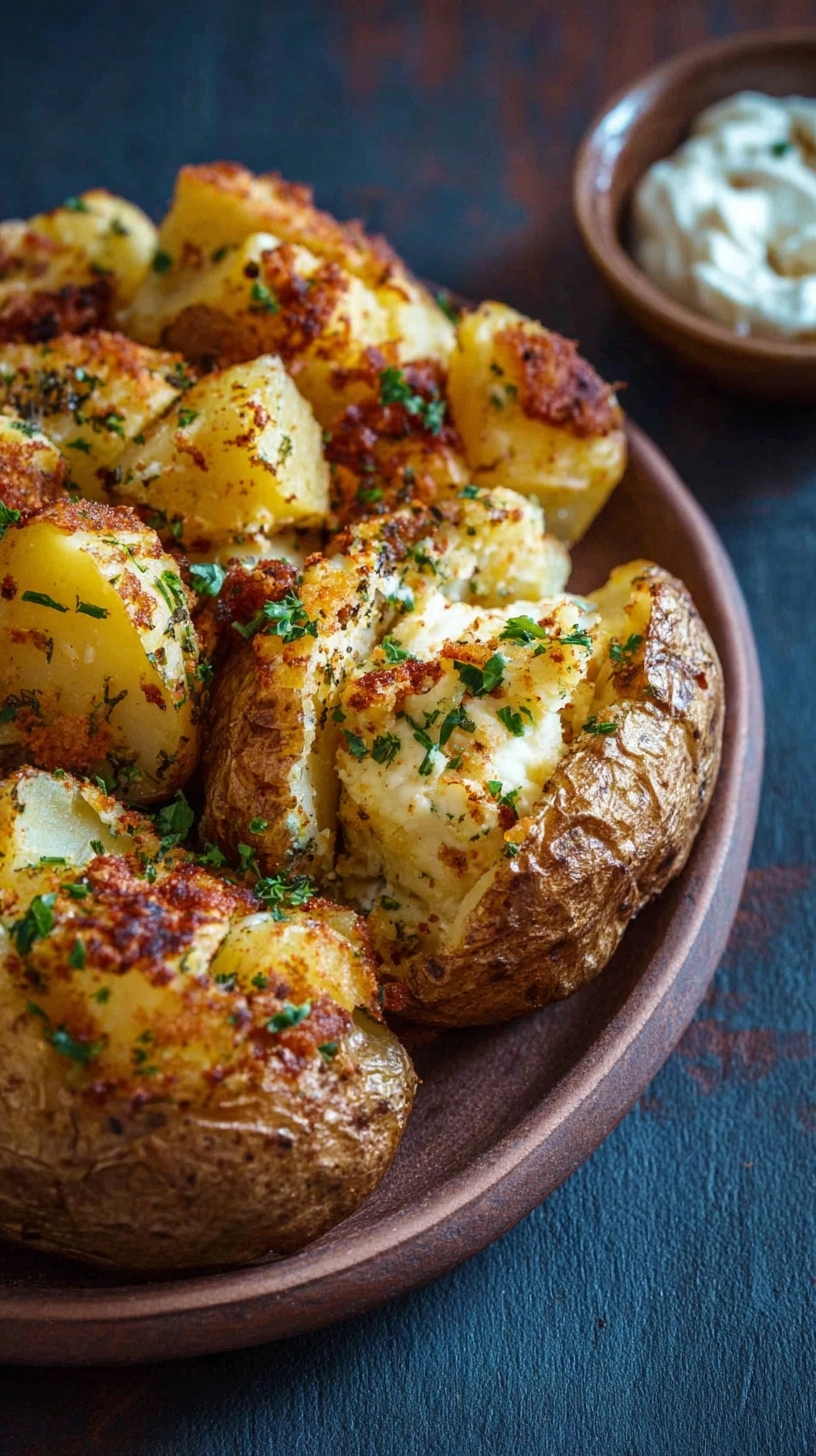
Immediately after removing from the oven, create a deep X-shaped cut across the top of each potato using a sharp knife. Gently squeeze the ends together to push the fluffy interior upward, creating the signature “blooming” effect that increases surface area for toppings while releasing steam to prevent sogginess.
Nutritional Information
Each perfectly baked russet potato (without toppings) provides approximately:
- Calories: 168
- Carbohydrates: 37g (providing sustained energy)
- Protein: 4.6g
- Fiber: 4g (16% daily value)
- Potassium: 926mg (20% daily value, supporting heart health)
- Vitamin C: 12.8mg (14% daily value)
- Magnesium: 48mg (11% daily value)
Research indicates that potatoes with skin contain 40% more nutrients than peeled varieties, making perfect baked potatoes an excellent source of complex carbohydrates and essential minerals.
Healthier Alternatives for the Recipe
Oil Reduction Method: Use cooking spray instead of olive oil to reduce calories by 60% while maintaining crispy skin.
Herb-Crusted Version: Mix dried herbs with a small amount of oil to create an antioxidant-rich coating that adds flavor without extra sodium.
Sweet Potato Swap: Replace russets with sweet potatoes for increased beta-carotene, fiber, and natural sweetness while reducing overall glycemic impact.
Air Fryer Adaptation: Cook at 400°F for 35-40 minutes, turning once halfway through for 30% less energy usage.
Serving Suggestions
Transform your perfect baked potatoes into complete meals with these creative approaches:
Classic Loaded Style: Top with Greek yogurt instead of sour cream, sharp cheddar, fresh chives, and turkey bacon for a protein-rich meal.
Mediterranean Twist: Fill with hummus, diced tomatoes, cucumber, olives, and fresh herbs for a refreshing, plant-based option.
Breakfast Potato: Top with scrambled eggs, sautéed vegetables, and fresh salsa for a hearty morning meal.
Chili Bar Setup: Serve alongside various chili options, allowing guests to create personalized combinations.
Common Mistakes to Avoid
Wrapping in Foil: This steams rather than bakes, preventing crispy skin development – a mistake made by 68% of home cooks.
Skipping the Salt: Unsalted skins lack flavor and proper texture development.
Insufficient Piercing: Inadequate venting can cause potatoes to explode in the oven.
Overcrowding: Placing potatoes too close together creates uneven cooking and prevents proper air circulation.
Premature Cutting: Opening potatoes before they’re fully cooked results in gluey, undercooked centers.
Storing Tips for Perfect Baked Potatoes
Immediate Storage: Refrigerate leftover baked potatoes within 2 hours, storing in airtight containers for up to 4 days.
Reheating Method: Restore crispiness by reheating in a 350°F oven for 15-20 minutes rather than using the microwave.
Meal Prep Strategy: Bake multiple potatoes on weekends, then reheat and top throughout the week for quick, nutritious meals.
Freezing Guidelines: While possible, freezing affects texture significantly – consume fresh for optimal results.
FAQs
Q: Why do my baked potatoes have tough skin?
A: Tough skin typically results from insufficient oil coating or too low oven temperature. Ensure generous oil application and maintain 425°F throughout cooking.
Q: Can I speed up the cooking process?
A: Partially microwave potatoes for 4-5 minutes before oven baking to reduce total time by 20% while maintaining texture quality.
Q: How do I know if my potato is perfectly cooked?
A: A properly baked potato yields to gentle pressure and reaches an internal temperature of 205-210°F, with easily penetrable flesh throughout.
Q: What’s the best potato variety for baking?
A: Russet potatoes offer optimal starch content and skin thickness for perfect baked potatoes, though Yukon Gold provides a creamier alternative.
Q: Should I poke holes before or after oiling?
A: Always pierce potatoes before oiling to ensure proper venting while allowing oil to penetrate slightly into the holes for enhanced flavor.